Talk Fast, Watch Closer: How Dialogue-Heavy Foreign Films Are Dominating Your Streaming Queue

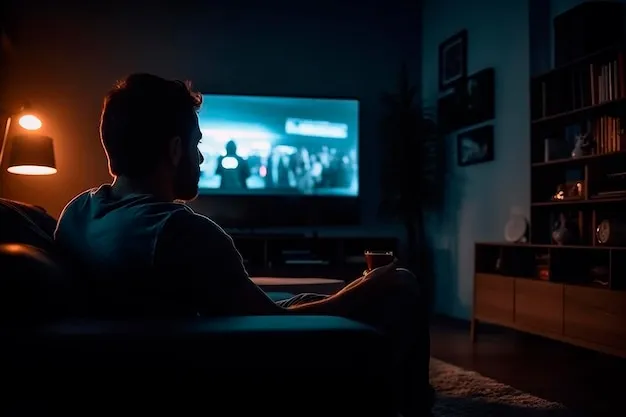
Photo: person watching subtitled foreign film on laptop in dark room engaged, via c8.alamy.com
Something funny happens when you sit down to watch a Scandinavian crime thriller or a French ensemble comedy with English subtitles. About twenty minutes in, you realize you haven't touched your phone. Not once. You're locked in — and it's not just because the story is good. It's because the movie is talking at you so fast that the moment you look away, you're lost.
That's not an accident.
The Strategy Behind the Speed
A growing number of international filmmakers are deliberately writing scripts that are dense, wordy, and relentless. The kind of dialogue that, in a dubbed version, would feel exhausting. But with subtitles? It creates something close to a trance state for the viewer.
Take Danish director Thomas Vinterberg, whose ensemble films pile conversation on top of conversation in ways that feel almost theatrical. Or consider the work coming out of Japan — directors like Ryûsuke Hamaguchi, whose film Drive My Car runs nearly three hours and is almost entirely composed of people talking in cars, theaters, and rehearsal rooms. It swept the Oscars in 2022. American audiences didn't just tolerate the wall-to-wall dialogue. They loved it.
The reason, film critics and distributors are starting to agree, comes down to active engagement. When you're reading subtitles, your brain is doing more work. You're processing spoken language (even if you don't understand it), reading the translation, and watching the actors' faces and body language — all at once. That extra cognitive load actually pulls you deeper into the story, not out of it.
Scandinavian Thrillers and the Art of the Verbal Trap
Nordic noir has been a streaming staple for over a decade now, ever since The Killing and The Bridge made American audiences realize that Danish and Swedish TV could be every bit as gripping as prestige American drama. What made those shows work wasn't just the moody landscapes or the slow-burn plots. It was the dialogue.
Scandinavian crime writing tends to favor precision. Characters say exactly what they mean — or they don't say it at all, and the silence lands like a punch. When the dialogue does come fast, it comes in bursts: interrogation scenes, family arguments, bureaucratic standoffs where every word is loaded. Subtitle readers have to stay sharp to catch the implications.
This has influenced how producers pitch Nordic content for global distribution. According to people working in international acquisitions, dialogue density has quietly become a selling point. A show where characters talk a lot is a show where audiences have to pay attention — and platforms like Netflix and Mubi have learned that high-engagement viewing translates directly into completion rates and positive word-of-mouth.
French Comedies and the Timing Problem
If Scandinavian thrillers use dialogue as tension, French comedies use it as percussion. The rhythm of a great French comedy — think anything from the Dinner Game era of Francis Veber or the more recent work of Olivier Nakache and Éric Toledano — depends on characters talking over each other, interrupting, backtracking, and escalating in ways that feel almost musical.
The subtitle challenge here is real. Comedy timing in any language is fragile, and translating it into English text that appears on screen at exactly the right moment is genuinely difficult. But when it works, it works in a way that dubbed versions simply can't replicate. The original voices carry the rhythm. The subtitles just have to land at the right beat.
American viewers who've discovered French comedy through streaming often describe the experience as surprisingly physical — you're laughing before you've fully processed what you just read, because your ears caught the tone of the line even if you didn't understand the words. That's the subtitle speed trap in action: the original audio does emotional work that the translation doesn't have to carry alone.
Japan's Dialogue Renaissance
Hamaguchi's success with Drive My Car wasn't a one-off. Japanese cinema has seen a quiet resurgence of dialogue-forward filmmaking that's finding serious audiences in the US. Directors like Hirokazu Kore-eda have long favored naturalistic, conversation-heavy scenes that unfold slowly and reward close attention. But newer voices are pushing that even further, writing scripts where the density of language is almost the point — where what characters say, and how they say it, is the entire architecture of the film.
For subtitle readers, this creates an unusual kind of immersion. You're not just following a plot. You're inhabiting a language you don't speak, guided by text that's doing its best to carry nuance across a massive cultural gap. The effort required is part of what makes it feel meaningful.
Why Streaming Platforms Are Paying Attention
Here's the business angle that's reshaping what gets greenlit internationally: platforms are increasingly able to measure how engaged their viewers are. Not just whether they finished a movie, but whether they paused, rewound, or abandoned it partway through.
Dialogue-heavy foreign films with subtitles score remarkably well on engagement metrics. Viewers who commit to them tend to finish them. They rewatch scenes. They recommend them to friends. They leave reviews. In streaming terms, that's gold.
This is starting to influence which international projects get picked up for global distribution. A slow-burn drama with a lot of talking used to be a harder sell to American distributors. Now, with data showing that subtitle-reading audiences are among the most loyal and engaged on the platform, the calculus is shifting.
What This Means for You as a Viewer
If you've been putting off that three-hour Japanese film or that French political drama because it looked like a lot of work, consider reframing the ask. The work is the point. The density of the dialogue isn't a barrier — it's the feature.
The films that are winning over American audiences right now aren't doing it by being easy. They're doing it by demanding your full attention and then rewarding it completely. The subtitle speed trap is real, but once you're in it, you probably won't want out.
Next time you're scrolling through your queue, pick the one that looks like it might be too talky. Odds are, that's the one you'll still be thinking about next week.